
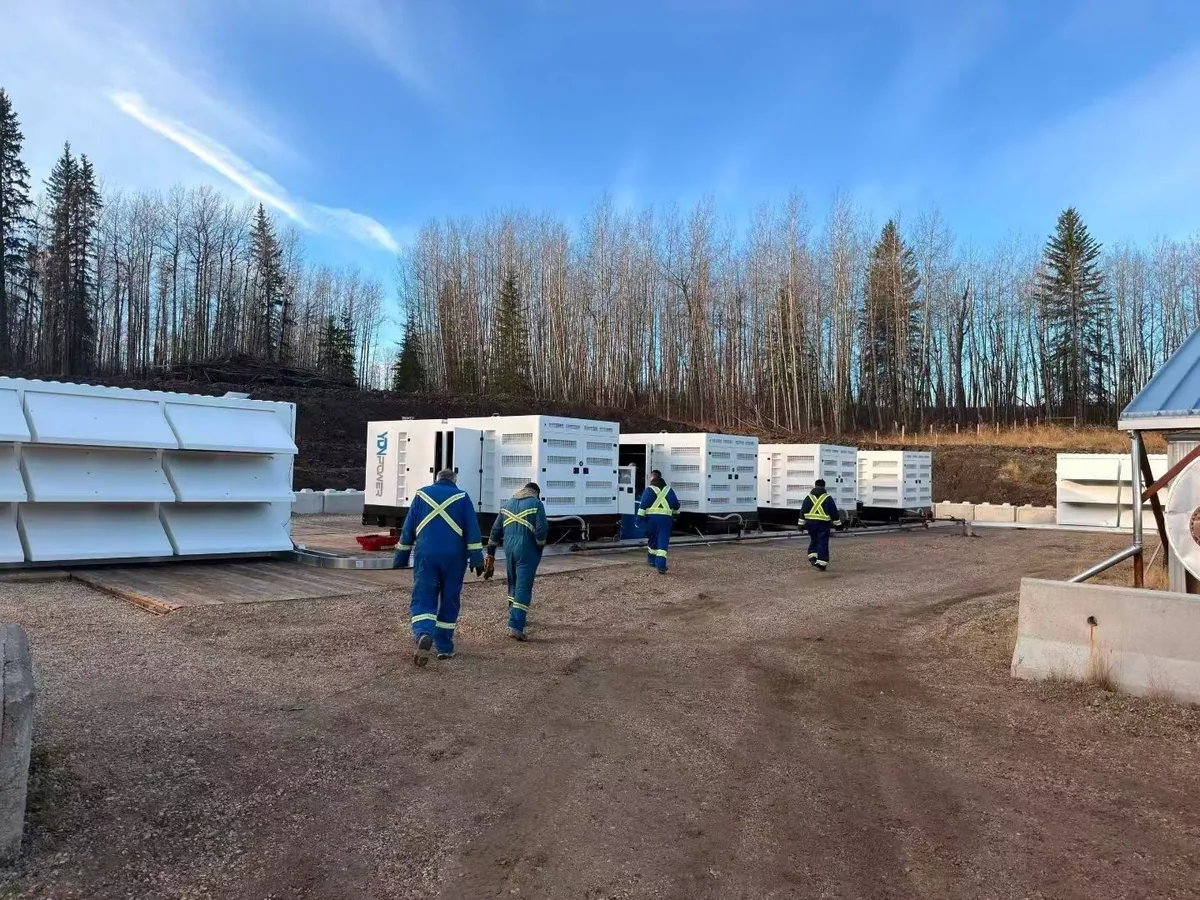
Wellpad Power: How to Decide Between Renting and Buying Generation for a Remote Site
The World Bank counted 167 billion cubic metres of gas flared in 2025, the third consecutive annual increase, and valued the lost volume at an estimated 54 billion US dollars [1]. The IEA’s number is more uncomfortable for anyone who assumes the gas has nowhere to go: most flares in the highest-emitting countries sit within about twenty kilometres of an existing gas line [3]. Distance is not the obstacle. Ownership is.
Turning wellhead gas into electricity needs a machine, and someone has to own that machine. Owner-operated, rented by the month, or bought as a service with the fuel and the maintenance bundled in — three structures, one site, three different sets of numbers. The equipment can be identical in all three cases. The risk is not.
This article only covers the commercial structure. It assumes you have already decided to generate on site rather than send the gas elsewhere — that comparison is set out separately — and that the physical deployment is understood: skid selection, gas train, commissioning. What follows is the part that usually gets decided by habit instead of arithmetic.
Why “Rent or Buy” Is the Wrong First Question
The question arrives as a price comparison, and it is almost never answered as one. A rental rate is quoted per month or per day, a purchase is quoted as a capital sum, and the two numbers are never put on the same timeline. The result is predictable: short-term projects rent because the capital figure looks frightening, and long-life pads buy because the monthly figure looks wasteful. Both decisions can be wrong in the same week.
A rental contract prices availability. A purchase prices capability. If the load disappears in eighteen months, a purchase leaves you holding capability you will not use — and an asset you now have to move, store or sell. If the load runs for a decade, a rental contract keeps paying for availability long after the machine has paid for itself in someone else’s books.
So the useful version of the question is not what a month costs against what a unit costs. It is four questions in sequence: how long will this load exist, how hard will the machine actually work, who carries the consequence of a stopped machine, and what happens to the gas if you do not burn it. Answer those and the structure usually chooses itself.
The Five Variables That Actually Decide It
Five inputs move the answer. Everything else — brand, enclosure colour, payment terms — is detail that gets negotiated after the structure is settled.
| Variable | What it changes in the model | Pushes toward rental | Pushes toward ownership |
|---|---|---|---|
| Remaining field life | The window over which a capital outlay has to earn its return | Pad or field life shorter than the payback horizon | Life comfortably longer than the horizon |
| Load factor | How much of the machine’s capability is paid for but never used | Cyclic, seasonal or drilling-driven load | Flat load around the clock |
| Gas ownership and quality | Who pays for fuel treatment, who carries derate risk | Gas bought at a tariff, clean and stable | Gas you already own and would otherwise flare |
| Who is on site at 02:00 | Converts maintenance into either a contract line or a payroll line | No operator, no workshop within reach | Site team, spares and workshop nearby |
| Capital treatment and mobility | Balance sheet versus operating cost; how easily the asset moves | Capital constrained; asset must move between pads | Capital available; asset stays for years |
Where Rental Wins
Rental is the right structure whenever the load is real but its duration is not yet known. Appraisal wells, extended flow tests, early production ahead of a permanent facility, pads waiting on a pipeline tie-in that keeps slipping — all of these need power now and none of them can justify a capital decision made against a ten-year assumption.
It also wins when the operator has no intention of becoming a power company. Running a reciprocating gas engine is a small industrial operation: oil analysis, spark plugs, filters, valve clearances, alarm lists, a spare-parts cupboard and somebody who reads the controller. A rental contract can absorb all of it. That is not a trivial benefit at a field where the production supervisor already has eleven other things to be accountable for.
There is a third case, and it is the one behind most of the search traffic on this subject: the rental fleet itself. If you are the operator building a fleet rather than powering one pad, the arithmetic inverts. You are not optimising a single site, you are optimising a fleet that must earn across many sites. Mobility, standardisation, a control system a third-party technician can run, and a specification you can honestly promise to every customer matter more than squeezing the last few kilowatts out of one gas composition. Fleet units are usually specified for the gas quality you can guarantee — utility-grade or lightly treated — not for raw associated gas, because you cannot promise every future site the same feed.
What rental does not do is remove the hard engineering. Fuel treatment scope, gas quality risk and the party who pays for downtime all still have to be written down. A rental agreement that is silent on gas composition is not a cheaper contract; it is a contract with an unpriced dispute in it.
Where Ownership Wins
Ownership wins on three conditions that tend to arrive together: a long-life load, a flat load, and gas you already control.
The load argument is straightforward. A production pad running artificial lift, instrumentation and a camp draws a load that never switches off. That is the profile a reciprocating gas engine is happiest with, and it is the profile that keeps utilisation high enough for a capital outlay to amortise. The clearest evidence we can point to is not an argument, it is a controller reading: one unit at an off-grid field has logged 9,848 running hours and 1.63 million kWh across 154 starts, averaging roughly 165 kW. That is what a machine looks like when the load justifies owning it.
The gas argument is stronger still where the alternative is flaring. If the gas is a by-product you already own, the fuel cost of generation is not a market price — it is the cost of conditioning the stream to something an engine can burn. That changes the arithmetic in a way no rental rate can match, because a rental contract has to price fuel on the assumption that you are buying it. Where flaring carries a penalty or a ban, that gap widens further (the policy pressure on routine flaring).
Decision cycles in this business are long, and the structure question is usually settled well before the purchase order. The first two units for a Middle Eastern field arrived after a decision cycle that ran over a year.
The third condition is heat. Electrical efficiency for this class of engine sits at 33–35%. In combined heat and power configuration, total efficiency reaches 85–90%, because the jacket water and exhaust heat go into process heating, tank heating or camp hot water instead of into the sky (how the CHP case is built). A rented unit almost never comes with a heat-recovery package matched to your process. If the site needs both electricity and heat, the ownership case is usually decided by the heat side, not the power side.
The Break-Even Arithmetic You Can Run Yourself
You do not need our numbers to run this. You need your own load-duration curve and two cost estimates put on the same timeline. Four steps, in this order.
| Step | What you calculate | Data you need | What it tells you |
|---|---|---|---|
| 1. Build the load-duration curve | Annual hours spent in each load band, not the peak | Hourly kW for a representative month, plus known seasonal swings | How many hours a year the asset actually earns |
| 2. Price availability, not energy | Annual cost of not owning: rental equivalent plus mobilisation, demobilisation, standby, and any scope the contract excludes | Rental quotation, mobilisation terms, excluded scope list | The true annual cost of the rental route |
| 3. Price ownership in full | Capital outlay plus mobilisation, fuel treatment, spares and consumables, operator hours, insurance, end-of-term removal and residual value | Equipment scope, treatment scope, labour plan, maintenance calendar | The true annual cost of the ownership route |
| 4. Compare, then stress it | Net comparison across the shorter of field life or asset life; then rerun at half the life and at 70% of the assumed load factor | Steps 1 to 3 | Whether the answer survives being wrong |
The comparison itself is one line: break-even months equal the ownership outlay divided by the monthly rental equivalent you would otherwise pay. Everything difficult sits in the two inputs, which is why steps two and three matter more than the division.
Stress-testing is what separates a decision from an assumption. If ownership still wins when you halve the field life and cut the load factor by thirty per cent, the case is robust. If it only wins under the optimistic assumption you started with, you have found the reason to rent.
The Cost Lines That Decide It, and Where They Hide
Most rent-or-buy comparisons fail because both sides are quoted on the same narrow basis: the machine. The lines below are where the two structures genuinely diverge, and where a quotation comparison quietly stops being like-for-like.
| Cost line | Who carries it in a rental | Who carries it when owned | How to put a number on it |
|---|---|---|---|
| Mobilisation and demobilisation | Usually the lessor, priced into the rate | The owner, as a one-off project cost | Transport study for the actual route, including permits and lifting |
| Fuel conditioning | Frequently excluded, or limited to a defined gas specification | The owner, once, as a treatment scope | Gas analysis at the engine inlet, then the treatment scope it implies |
| Operator and maintenance labour | Depends on dry or wet lease — check which | The owner’s payroll or contractor | Hours per week at the site’s actual manning level |
| Spares and consumables | Consumables usually excluded even in a wet lease | The owner | First-year kit plus annual consumption at the expected running hours |
| Downtime exposure | Defined by the availability clause, if there is one | The owner, in full | Value of deferred production or the cost of diesel fallback per day |
| Site works | Rarely included | The owner | Pad, gas train, cabling, earthing, enclosure foundations |
| End of term | Return condition and removal terms | Removal, restoration or residual value | Read the return clause before signing, not after |
Two of these lines carry more weight than the rest. Fuel conditioning decides whether the unit runs at its rated output or derates for the life of the contract. Downtime exposure decides whether the cheap option was cheap. Both are quantifiable before signature, and both are routinely left out of the comparison because neither appears on the equipment quotation.
What the Gas Does to the Model
A rental fleet is normally specified against a gas it can predict. A wellpad cannot offer that. Associated gas changes composition as the field ages, and the change is not gradual in the way spreadsheets assume.
This is where the two structures carry risk differently. In an owned asset, a composition change is an engineering problem: adjust the treatment, accept a derate, log it on the controller. In a rented asset, it is a contractual problem: whether the feed still meets the specification in the agreement, and who pays if it does not. That is why the gas analysis belongs in the rental negotiation, not in the commissioning folder.
Our own configuration gate is the same for either structure. No configuration is quoted before a gas analysis taken at the engine inlet. The numbers below come from the documentation supplied with our generator range, and the field case in the middle row is real: hydrogen sulphide at roughly 6,000 ppm was handled, but only after desulfurisation, not by the engine alone.
| Parameter | Requirement at the engine inlet | What happens when it is not met |
|---|---|---|
| Methane content | 55% or more, lower heating value at least 5,500 kcal/m³ | Combustion stability and output fall away; the stream needs blending or a different route |
| Hydrogen sulphide | Below 200 mg/Nm³ without treatment; roughly 6,000 ppm handled after desulfurisation | Corrosion and lube-oil attack; a desulfurisation scope is required before the engine |
| Particulates | Below 5 µm | Filter loading and cylinder wear; filtration upstream |
| Water content | Below 20 g/Nm³ | Free water in the gas train; dehydration required |
| Supply pressure | 5–35 kPa at the engine inlet | Booster below 5 kPa, regulator above 100 kPa |
| Gas temperature | Above 0 degC, standard window up to about 30 degC | Trace heating or insulation on the gas train |
There is a second, quieter effect. Derate is normal. An engine rated at a nominal figure will hold a lower continuous output on a heavier or leaner stream, and the controller will protect itself rather than fail. Any model built on nameplate output overstates the case — ours included, which is why we size on the gas you actually have (the high-sulphur and multi-component case).
The Load Profile at a Wellpad Is Not the Load Profile on a Rig
Two sites with the same connected load can need completely different machines. A drilling pad carries a high peak, large motor starts and a cyclic duty. A production pad carries a flat, comparatively small load that runs continuously — artificial lift, instrumentation, telemetry, camp. Sizing both from the peak kW of the first day is the most common mistake we see in enquiries.
A machine sized on peak alone spends most of its life at part load. On a gas engine that means poor fuel efficiency, combustion temperatures low enough to foul plugs and dilute lube oil, and a shorter life than the running hours alone would suggest. Two smaller units that step in and out of service usually beat one large unit that never reaches its band, and the redundancy is a free side effect (the sizing arithmetic).
Frequency belongs in this section too. A unit set for 60 Hz cannot simply be moved to a 50 Hz market and expected to perform; the receiving standard decides the configuration. That is a minor detail for a single pad and a serious constraint for a rental fleet that intends to move assets between regions.
Whatever the structure, keep the diesel set. A gas engine does not black-start a site from nothing, and no operator should plan a wellpad around a single fuelling path with no fallback. Rental contracts sometimes include a standby diesel; ownership cases need one written into the capital plan.
Dry Lease, Wet Lease and Power-as-a-Service
Rental is not one product. The three structures below differ mainly in who carries the operating risk, and the difference in responsibilities is bigger than the difference in rate.
| Responsibility | Dry lease | Wet lease | Power-as-a-service | Owned |
|---|---|---|---|---|
| Equipment | Lessor | Lessor | Provider | Owner |
| Fuel supply and conditioning | Renter | Usually renter | Provider | Owner |
| Operation and maintenance | Renter | Lessor | Provider | Owner |
| Spares and consumables | Renter | Negotiated | Provider | Owner |
| Uptime guarantee | None or limited | Availability clause | Capacity or availability commitment | None |
| Mobilisation | Negotiated | Lessor | Provider | Owner |
| Certificate for the destination market | Renter verifies | Lessor | Provider | Owner |
A dry lease is a financing arrangement with a machine attached. A wet lease buys you an operator. Power-as-a-service buys an outcome, and it is priced accordingly — which is why it usually looks expensive per kilowatt-hour and cheap per unit of risk transferred. None of the three is better in the abstract. The structure should follow whoever is best placed to carry the gas risk, because that is the risk that actually moves.
Emission Tier and Certificate: Ask Before the Unit Lands
Emissions requirements are jurisdictional, and the vocabulary differs by market — EPA Tier levels in the United States, EU Stage levels in Europe, and separate national schemes elsewhere. A unit that carries CE, CSA and EAC is certified for the markets those marks cover. It is not automatically compliant with a US emissions tier, and no honest supplier will tell you otherwise.
This matters more for rental fleets than for a single pad, because a fleet that moves units across borders inherits every market’s requirements. Ask two questions in writing before the unit ships: which certificate does this specific unit carry, and does that certificate match the jurisdiction it will run in. The answer belongs in the contract, not in a brochure.
Where Neither Structure Works
A framework that never says no is a sales document. These are the conditions that should stop a project, whichever structure is on the table.
Flow tests measured in days. Mobilisation takes longer than the test. Use diesel.
Gas too lean or too intermittent. Below roughly 55% methane, or a stream that stops and starts, the economics and the combustion both fall apart.
No one within reach of the site. If there is no operator, no workshop and no remote diagnostics coverage, the first fault becomes a shutdown of unknown length.
Pad life shorter than the mobilisation and demobilisation cycle, in either structure.
Logistics or security that make a permanent asset a liability rather than an asset.
Any plan that removes the flare. Emergency relief stays, whatever the generation scheme — the flare is not the thing being replaced.
Each of these has ended a project somewhere. Screening them out takes one meeting. Discovering them after the unit has been ordered takes a year.
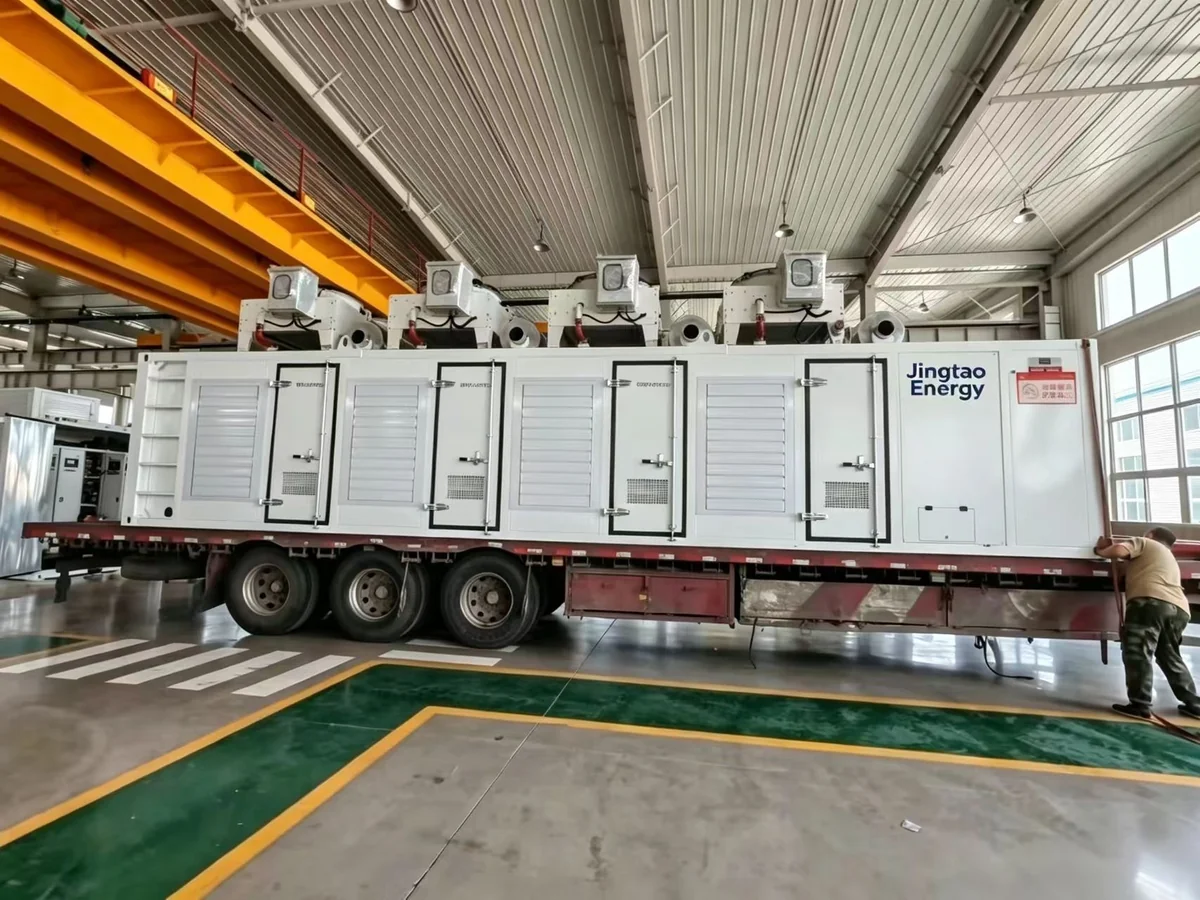
Figure 1. A four-engine containerised module. What is rented or bought is the module and the service terms around it, not an engine on its own.
Technical Data Sheet
| Parameter | Value |
|---|---|
| Electrical output, single platform | 80–350 kW on one engine platform |
| Electrical output, larger platform | 300–1,000 kW per unit |
| Containerised bank | Five units of 300 kW, about 1,500 kW in one enclosure |
| Electrical efficiency | 33–35% simple cycle |
| Combined heat and power | 85–90% total efficiency with heat recovery |
| Frequency and voltage | 50 Hz or 60 Hz; 400 V / 480 V / 600 V |
| Fuel specification | Methane 55% or more, lower heating value at least 5,500 kcal/m³ |
| Gas cleanliness | Hydrogen sulphide below 200 mg/Nm³ untreated; particulates below 5 µm; water below 20 g/Nm³ |
| Gas supply conditions | 5–35 kPa at the inlet; above 0 degC, standard window up to about 30 degC |
| Durability record | 35,000 running hours without major overhaul; outdoor units structurally intact after close to five years |
| Warranty | One year or 2,000 running hours where a service network exists; remote support and shipped spares elsewhere |
| Certification | CE, CSA, EAC |
Figures above come from the documentation supplied with our gas generator range and from running-hour records on delivered units. Output figures are nominal; continuous output on a given stream is confirmed only after a gas analysis. Where a figure is derived rather than measured, we say so.
Frequently Asked Questions
Is it cheaper to rent or buy a generator for a wellpad?
It depends on four numbers, not on the rate: how long the load exists, how flat the load is, who carries downtime, and whether you own the gas. Rent when the load’s duration is uncertain or the pad life is shorter than the payback horizon. Buy when the load runs continuously for years and the fuel is a by-product you already control. A rate comparison on its own will give you the wrong answer about half the time.
How long does a wellpad have to run before ownership makes sense?
Long enough for the asset to earn back its outlay inside the field’s remaining life, with margin. The practical test is not a single number of months but a stress test: if ownership still wins at half the expected field life and at 70% of the assumed load factor, the case is robust. If it only wins on the optimistic assumption, rent.
Can I rent a unit that runs on raw associated gas?
Sometimes, but the contract has to say so explicitly. Rental fleets are usually specified for utility-grade or lightly treated gas, because a fleet operator cannot promise every future site the same composition. Raw associated gas with heavy ends and hydrogen sulphide needs a treatment scope, and the party carrying that scope — and the derate risk that comes with composition drift — must be named in the agreement.
Who maintains the unit under a rental contract?
It depends on the structure. A dry lease leaves operation and maintenance with the renter. A wet lease includes an operator. Power-as-a-service usually includes both plus an availability commitment. Read the consumables clause specifically: filters, spark plugs, oil and seals are frequently excluded even where maintenance labour is included.
What happens if the gas composition changes after commissioning?
The engine control unit derates output rather than failing, and the derate is visible in the monitoring data. In an owned asset that is an engineering adjustment. In a rented asset it becomes a contractual question about whether the feed still meets the agreed specification, which is why the gas analysis should be attached to the rental agreement rather than filed after commissioning.
How much gas does one megawatt need?
Roughly 7,000 m³ per day of methane-rich gas at about 34% electrical efficiency. The derivation is short: a cubic metre of methane carries about 35.9 MJ of lower heating value, one megawatt of output needs about 2.94 MJ per second of fuel, and 2.94 divided by 35.9 is about 0.082 m³ per second. Heavier gas, high hydrogen sulphide and cold ambient conditions all move that figure.
Do I still need a diesel generator on site?
Yes, in almost every case. A gas engine does not black-start a site from nothing, and a single fuelling path with no fallback is not a plan. The diesel set also covers the period before first gas and any interruption in the gas supply. Some rental structures include a standby diesel; ownership cases should put one in the capital plan from the start.
Which emission tier should the unit carry?
The one that matches the jurisdiction it will run in. Emission requirements are market-specific — EPA Tier levels in the United States, EU Stage levels in Europe, separate national schemes elsewhere. Our units carry CE, CSA and EAC; that is not the same as a US emissions tier, and any supplier who blurs the two is worth a second look. For a fleet moving between markets, put the certificate requirement in the contract.
What should a rental fleet operator specify before buying units?
Mobility, standardisation and a control system a third-party technician can operate, in that order. Then the gas envelope the fleet can honestly promise to customers — usually utility-grade or lightly treated gas — and the frequency and voltage standards of the markets the fleet intends to serve. A unit optimised for one exotic composition is a hard asset to redeploy.
Next Step: Send the Load Profile and the Gas Analysis
Two documents decide the structure faster than any quotation: a load profile with peak, sustained and annual hours, and a gas analysis taken at the engine inlet. With those we can put the rental and ownership cases on one timeline and tell you where the break-even sits for your field — including the cases where the answer is to stay on diesel.
→ Request a Quote — send the load data and gas analysis for a scoped configuration.
→ Download Brochure — platform specifications, container layouts and commissioning scope.
→ See the gas generator range — the units described in this article.
Talk to an engineer through our contact page if the gas stream is unusual — high hydrogen sulphide, heavy ends, or a composition that moves with the season.
References
[1] World Bank. 2026 Global Gas Flaring Tracker Report. World Bank Group, 2026. https://www.worldbank.org/en/programs/gasflaringreduction/publication/2026-global-gas-flaring-tracker-report
[2] World Bank. Global Flaring Data — annual flared volumes and country-level estimates. https://www.worldbank.org/en/programs/gasflaringreduction/global-flaring-data
[3] International Energy Agency. Global Methane Tracker 2025 — Key Findings. https://www.iea.org/reports/global-methane-tracker-2025/key-findings
Need help choosing the right equipment?
Our engineers review your application and recommend the best fit — no obligation.