VFD vs Hydraulic Catwalk Drilling Rig — Electric Drive Guide
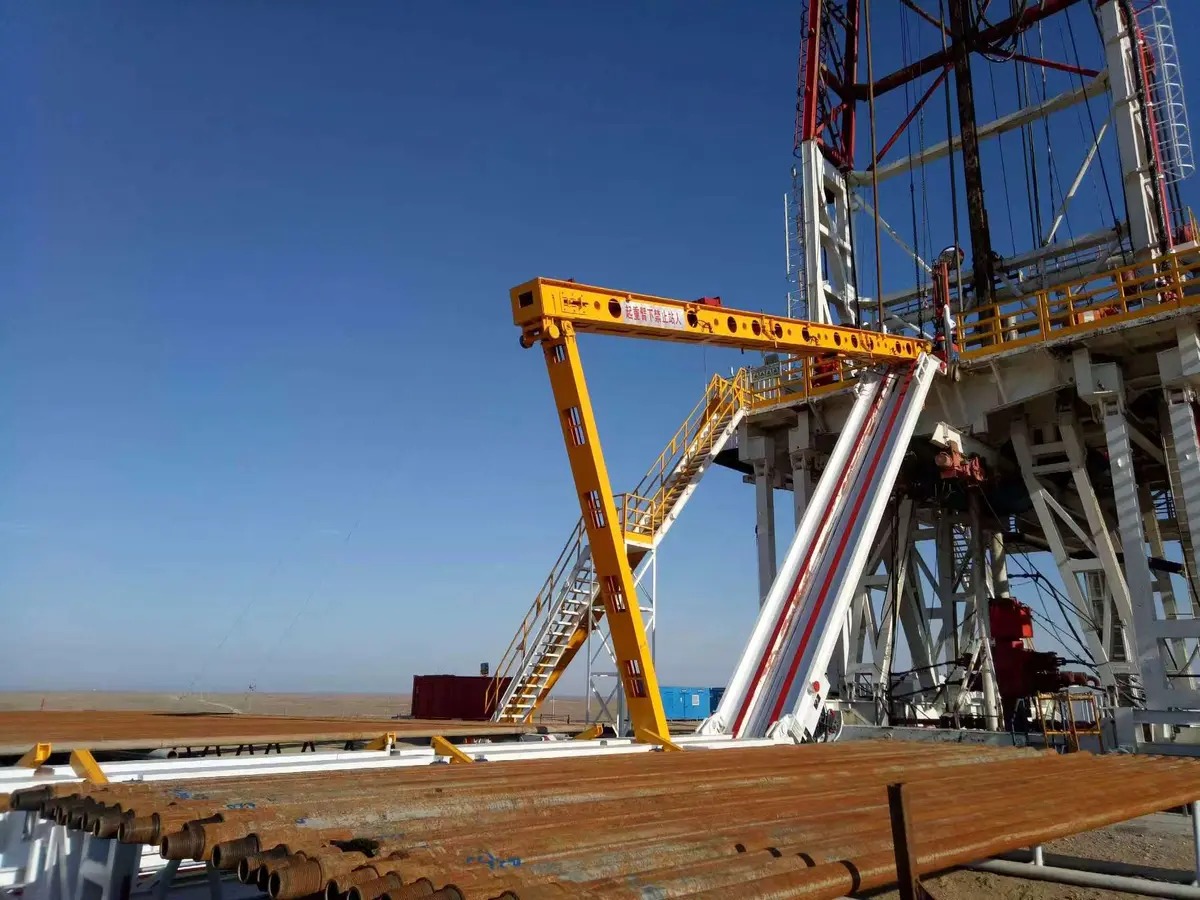
Every joint of drill pipe, casing, and drill collar that moves from the pipe rack to the rig floor passes through the catwalk. On a deep well, that’s 500 to 1,000 trips. The drive system inside that catwalk — hydraulic or electric VFD — determines how reliably those trips happen.
Most catwalk drilling rig systems on the market today are hydraulic. NOV, FET (Forum Energy Technologies), and others have built decades of experience around hydraulic power units, valve banks, and high-pressure cylinders. But a growing number of drilling contractors are switching to electric VFD catwalks — and the engineering case is straightforward.
1. How Hydraulic and Electric Catwalks Actually Work
Hydraulic Catwalk: Oil Under Pressure
A hydraulic catwalk drilling rig system uses a diesel engine or electric motor to drive a hydraulic pump. The pump pressurizes oil to 2,500–3,000 psi and distributes it through hoses, valves, and cylinders. Lifting comes from hydraulic cylinders; trolley traverse comes from a hydraulic motor. The strength of hydraulic catwalks is power density — a compact cylinder produces enormous force.
The trade-off: every hose, fitting, seal, and valve in the high-pressure circuit is a potential leak point. The pump runs continuously, consuming energy even when the catwalk is idle. And hydraulic oil viscosity changes with temperature — at freezing, standard AW32 oil exceeds 1,000 centistokes and becomes unpumpable without preheating.
Electric VFD Catwalk: Motor, Drum, Wire Rope
An electric catwalk replaces the hydraulic circuit with two variable-frequency drive (VFD) motors — one for the hoist winch, one for trolley traverse — each driving a wire-rope drum through a reduction gearbox. Steel wire rope pays out and takes up, pulling the pipe transport trolley along the ramp’s guide rails. A small auxiliary hydraulic unit handles support legs and pipe indexing at low pressure only.
A rotary encoder on each motor shaft reports position and speed to the PLC at millisecond intervals. The VFD varies motor speed by changing AC frequency, enabling smooth ramp-up, precise positioning, and consistent cycle times regardless of ambient temperature.
2. Energy: One Conversion vs Three
A hydraulic catwalk converts energy three times: chemical (fuel) to mechanical (engine) to hydraulic (pump) to mechanical (cylinder). Each conversion loses energy as heat. An electric VFD catwalk converts once: electrical to mechanical (motor).
Industrial Equipment Manufacturing (IEM) compared VFD mechanical drives against hydraulic drives in constant-torque applications. VFD systems achieve 90–95% overall efficiency; hydraulic systems reach only 80–85%. In a 372 kW application, the VFD consumed 8,928 kWh/day versus 12,528 kWh/day for the hydraulic equivalent — a 29% energy penalty for hydraulics.
The U.S. Department of Energy’s analysis of industrial VFD deployments found consistent savings of 20–50% compared to throttled or hydraulic alternatives. In one case where VFDs replaced hydraulic pump control, energy dropped 42%, oil temperature fell 15°F, and payback took 21 months.
3. Electric VFD vs Hydraulic: Parameter by Parameter
| Parameter | Hydraulic Catwalk Drilling Rig | Electric VFD Catwalk Drilling Rig |
|---|---|---|
| Drive Chain | Engine/motor to pump to hydraulic oil to cylinders | VFD motor to gearbox to wire-rope drum to trolley |
| Energy Conversions | 3 | 1 |
| System Efficiency | 80–85% | 90–95% |
| Cold Start (under 0°C) | Oil preheat 30–60 min; below -20°C high component risk | VFD soft-start ramp; start immediately; no fluid to warm |
| Leak Points | Every hose, fitting, seal, and valve in the high-pressure circuit | Auxiliary HPU only — main drive has zero high-pressure oil |
| Cycle Time Stability | Drifts with oil temperature | Consistent regardless of ambient temperature |
| Maintenance | Monthly filter changes; hydraulic technician required; 40+ spare part types over 2 years | Wire rope inspection + lubrication; motor bearings at 20,000+ hrs |
| Noise at Operator Station | 82–88 dBA (pump + engine) | 68–72 dBA (motors only) |
| Energy Consumption at Idle | Pump runs continuously | Motors stop; zero consumption |
4. Cold Weather: The Hydraulic Achilles’ Heel
Hydraulic systems depend on oil viscosity. At 40°C, ISO 46 oil flows at roughly 46 centistokes — ideal. At 0°C, the same oil exceeds 1,000 cSt. Fluid Power World’s cold-weather guide states standard AW32 anti-wear oil at freezing is “over 1,000 centistokes — unpumpable.” Even synthetic Arctic oil sits above 300 cSt at freezing.
Hydroll’s cold-start guide sets clear thresholds: above 10°C is optimal; 0–10°C needs longer warm-up; below -20°C carries “high risk of component damage without specialized fluids and equipment.” The standard workaround — tank heaters, heat trace, and 30–60 minutes of idle warm-up — adds delay to every cold start on a hydraulic catwalk drilling rig.
An electric VFD catwalk faces none of these constraints. Motor windings are Class H insulated (180°C). The VFD’s soft-start ramp brings the motor to speed without inrush current — no fluid to warm, no viscosity window to hit. The catwalk moves pipe when the rig is ready to drill, whether it’s January in Xinjiang or July in the Tarim Basin.
5. Maintenance: What Each Drive System Actually Costs to Run
IEM’s comparison of VFD versus hydraulic drives provides the most detailed public data on maintenance burden:
| Maintenance Factor | Hydraulic Drive | Electric VFD Drive |
|---|---|---|
| Routine Service | 3 filters replaced monthly (1–3 hrs downtime each); oil sampling | Oil check monthly (no shutdown); coupling check quarterly |
| Required Expertise | Hydraulic technician + electrical/instrumentation tech | Millwright + electrician — typical rig crew skill set |
| Spare Parts (2 Years) | 40+ items: filters, seals, gauges, sensors, valve cartridges, etc. | Coupling insert, wire rope, HPU filter elements |
| Capital Spares | Hydraulic pumps, air/oil cooler, oil heater, filter housings, hydraulic motors | Speed reducer, electric motor |
| Consumables (Annual) | 300–500 L hydraulic oil + filters (2–3 changes/year) | Approximately 20 L auxiliary HPU oil (1 change/year) |
The difference is significant. A hydraulic catwalk requires a specialized hydraulic technician — many operations rely on factory technicians for troubleshooting. An electric VFD catwalk can be maintained by the rig’s own crew.
6. When a Hydraulic Catwalk Still Makes Sense
Electric VFD is not the answer for every rig. Hydraulic catwalks remain the right choice when:
- Rig power is unstable — generators with wide frequency swings favor a diesel-hydraulic catwalk.
- Fleet standardization matters — a contractor with a dozen hydraulic catwalks and trained crews may prefer commonality.
- The program is short — a single-well, three-month campaign won’t recover the electric VFD upfront premium.
- You’re extremely remote — if you can crimp a hydraulic hose on site but the nearest VFD technician is 500 km away, hydraulic repairability wins.
For multi-well programs, deep drilling campaigns, cold climates, and any rig where non-productive time costs thousands per hour, the engineering case favors electric VFD. Drillmec, one of the industry’s rig automation leaders, moved to electric pipe-handling and recorded 98% reliability on automated operations.
7. Jingtao Electric VFD Catwalk: Proven at the Limits
Jingtao electric catwalks have been deployed on rigs in some of the most demanding onshore drilling environments. At 8,882 meters — Asia’s deepest onshore borehole — an electric catwalk handled the full drilling program, moving pipe in stands of three from rack to rig floor, cycle after cycle.
The same platform has operated through Xinjiang winters below freezing — conditions that would demand 45–60 minutes of hydraulic oil preheat — and through Tarim Basin summers above 40°C. The equipment handles drill pipe from 2-7/8 inch to 5-7/8 inch, casing up to 24 inches, and drill collars up to 11 inches. Cycle times scale with rig floor height: under 80 seconds for a 7.5 m floor, approximately 130 seconds for a 14 m floor — consistently, regardless of temperature.
Key components in every Jingtao electric catwalk:
- ABB VFD drives — 2 × 37 kW hoist + 11 kW traverse, with built-in line reactors for power quality.
- Siemens PLC with touchscreen HMI — real-time display of all system parameters.
- Electromagnetic parking brakes — spring-applied, electrically released; engage instantly on power loss.
- Explosion-proof certification — ExdIIBT4 on control cabinets, PLC enclosure, terminal box, and wireless remote.
- Three control modes — wireless remote (50 m), local panel, or integrated into the driller’s console.
- Auxiliary HPU — small circuit for support legs and pipe indexing only; operates intermittently at low pressure.
Frequently Asked Questions
What is an electric catwalk drilling rig system?
An electric catwalk uses VFD (variable-frequency drive) motors instead of a hydraulic power unit. A VFD motor turns a wire-rope drum through a reduction gearbox; the wire rope pulls the pipe transport trolley up and down the ramp. This eliminates the hydraulic pump, reservoir, valve bank, and high-pressure hoses from the main drive path.
Why are drilling contractors switching from hydraulic to electric catwalks?
Three reasons dominate. Cold-start performance: electric catwalks start immediately in sub-zero conditions; hydraulic catwalks need 30–60 minutes of oil preheating. Maintenance: electric systems eliminate hydraulic oil changes and filter replacements in the main drive — IEM data shows 40+ spare part types for hydraulic versus a coupling insert for VFD over two years. Energy: electric motors consume power only when moving pipe; hydraulic pumps often run continuously.
What maintenance does an electric catwalk need?
Routine items: wire rope inspection and lubrication, auxiliary HPU oil change (annual), encoder coupling check, VFD cooling fan filter cleaning, and electrical connection torque verification. Motor bearings rated 20,000+ hours. No high-pressure hoses, cylinder seals, or pump rebuilds in the main drive path.
Can electric catwalks handle the same pipe sizes as hydraulic ones?
Yes. The mechanical structure is common to both drive types. Jingtao electric catwalks handle drill pipe 2-7/8 inch to 5-7/8 inch in stands of three, casing up to 24 inches, and drill collars up to 11 inches. Cycle times range from under 80 seconds for a 7.5 m rig floor to approximately 130 seconds for a 14 m floor.
What happens if rig power fails during operation?
Electromagnetic parking brakes engage immediately — spring-applied, electrically released. No hydraulic accumulator or backup pump is needed. When power returns, the VFD performs a controlled restart with soft-start ramp.
Is an electric catwalk more expensive than hydraulic?
The VFD drives, PLC, and encoder feedback carry a higher upfront component cost. However, total cost of ownership favors electric: energy consumed only when moving, no hydraulic oil to purchase or dispose, fewer spare parts, and the rig crew can perform maintenance rather than requiring a specialized hydraulic technician.
Continue Reading
→ How to Choose a Drilling Rig Power Catwalk — the four decisions that determine catwalk performance: drive type, operating mode, rig floor height, and operational envelope.
→ Automated Pipe Handling at Ultra-Deep Wells: 50,000+ Joints, 8,882 m — field data from Asia’s deepest onshore well.
→ Power Catwalk Automation: The Road to the Unmanned Drill Floor — how catwalks, iron roughnecks, and pipe handling systems combine into a single automated workflow.
Reference
IEM — Cost Comparison of VFD/Mechanical Drive vs Hydraulic Drive
Need help choosing the right equipment?
Our engineers review your application and recommend the best fit — no obligation.