
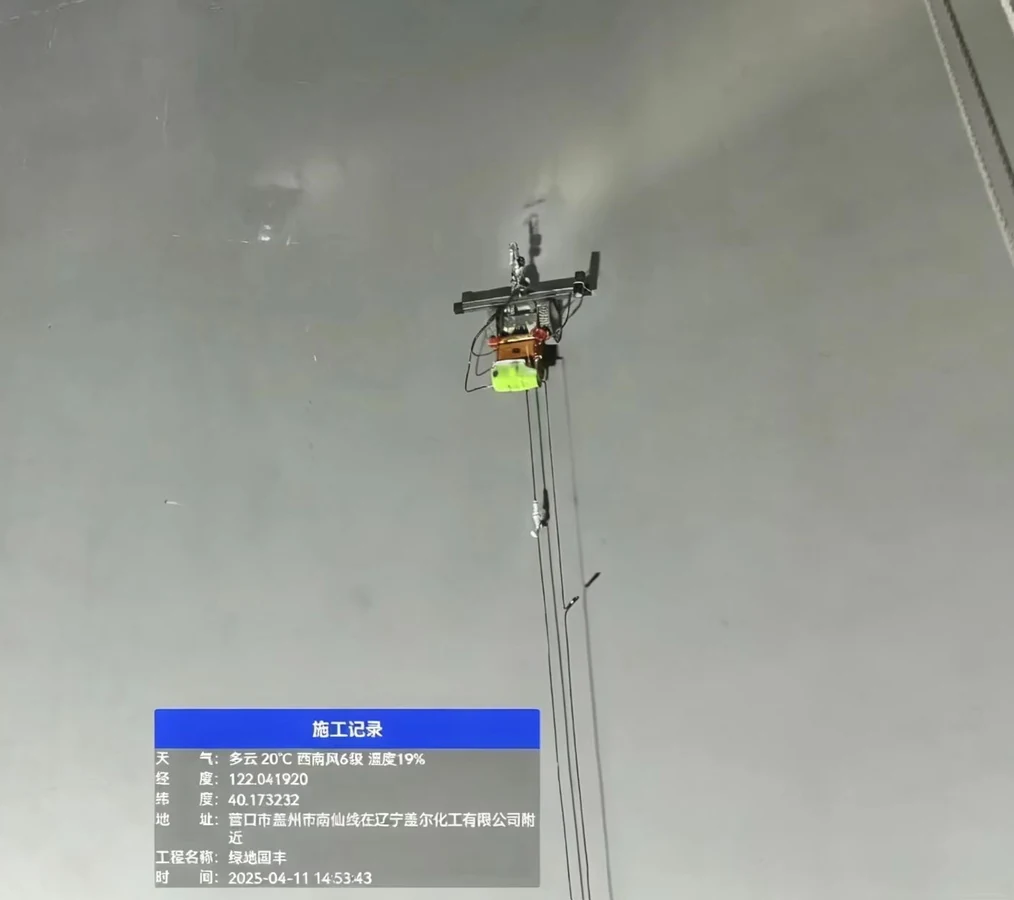
Explosion-Proof Tank Inspection: Field Report from Confined-Space Tank Work
At a Glance
A tank that has held crude oil is not an empty steel box. It is a permit-required confined space with a hydrocarbon atmosphere that only needs an ignition source to turn routine maintenance into a fatality. This report documents how an explosion-proof wall-climbing robot does tank inspection and cleaning from the outside — through a Ø60 cm manway, with the operator up to 200 m away — and what the certification behind the machine actually covers. It is written the way the work is actually done: what is certified, what has been field-proven, and what is still an open bid.
| Field | Detail |
|---|---|
| Equipment | JT-1 Mini explosion-proof wall-climbing robot — 60 kg, magnetic adhesion |
| Explosion-proof rating | Ex db ib IIB T4 Gb — GB/T 3836.1/.2/.4-2021, certificate ZJEx23.0915 |
| Access | Ø60 cm manway — no human entry |
| Operator position | Remote control, up to 200 m from the tank |
| Fleet record | First released 2020; roughly 120 units deployed |
| Sites referenced | Singapore refinery, Hainan coastal terminal, Nigeria storage bid |
The Confined Space You Don’t Want to Solve With People
Tank cleaning and inspection are usually framed as a coating or corrosion problem. They are not. They are a confined-space problem first, and the coating is second. A worker who enters a crude or fuel tank faces oxygen deficiency, toxic and flammable vapour, and a steel shell with one opening. Under the US rule that has become the global reference — OSHA 29 CFR 1910.146, Permit-Required Confined Spaces — every such entry is a controlled event: gas testing before and during the job, ventilation, a standby and rescue crew, communications, and a permit that has to be renewed for every shift [1].
That is the cost most equipment comparisons never write down. It is not the machine that is expensive; it is the preparation, supervision and rescue standby required to put people inside a vessel, repeated every day for the length of the job. The cleanest way to make confined-space work safe is to stop doing it with people. A magnetic climbing robot makes that possible for the steel tanks that dominate oil and gas storage, because the machine goes in and the operator stays out.
The explosion-proof tank robot guide on ATEX, IECEx and Ex markings explains the certification side of the same decision. The field record here is the other half: what the machine does once it is inside, and where it has actually done it.
What “Explosion-Proof” Changes About the Job
Certification is not paperwork for its own sake. In a tank that has held hydrocarbons, the atmosphere is classified by how often a flammable concentration appears — Zone 0 continuous, Zone 1 likely in normal operation, Zone 2 brief if it occurs. A tank that has been gas-freed and tested is typically still treated as Zone 1 or Zone 2 while maintenance is in progress, which means the equipment brought through the manway must carry an equipment protection level that matches the zone.
The JT-1 Mini carries the marking Ex db ib IIB T4 Gb. Decoded element by element: db is a flameproof enclosure that contains an internal explosion and cools the escaping gases; ib is intrinsic safety, with control circuits energy-limited so a fault cannot produce an ignition-capable spark; IIB is the gas group, covering IIA and IIB atmospheres but not IIC (hydrogen and acetylene); T4 caps surface temperature at 135 °C; and Gb means the machine is suited to Zone 1 and Zone 2. The full marking is checkable on the certificate: number ZJEx23.0915, issued 2023-07-11 and valid to 2028-07-10, against GB/T 3836.1, 3836.2 and 3836.4-2021, with the inspection report from a CNAS-accredited laboratory (L0116, ILAC-MRA recognised).
One point is stated plainly rather than smoothed over: this is a China national-standard certificate, not an ATEX or IECEx certificate. The GB/T 3836 series is a direct adoption of the IEC 60079 structure, and the CNAS report carries ILAC-MRA mutual recognition — but mutual recognition is not the same as a local certificate. If a project jurisdiction explicitly demands ATEX or IECEx, that has to be raised at the RFQ stage, not discovered at the tank. A supplier who blurs that line is doing the buyer a disservice; we would rather you find out now.
The Machine That Goes In: Ø60 cm Manway, 60 kg
The JT-1 Mini is the confined-space machine in the Jingtao wall-climbing family, built on a platform first released in 2020 and iterated in the field since. It climbs steel tank walls on permanent magnets held roughly 8 mm off the surface, so it moves on rubber wheels without grinding the coating. It enters through a standard Ø60 cm manway — the opening most pressure vessels already have — and swaps between blasting, coating and inspection modules in about 30 minutes. The full platform is documented on the JT-1 Mini explosion-proof wall-climbing robot product page; the numbers that matter in a confined space are below.
| Parameter | Value |
|---|---|
| Manway entry | Ø60 cm |
| Robot weight | 60 kg |
| Adhesion | Permanent magnet, ~8 mm air gap, rubber wheels |
| Remote control range | 200 m |
| Protection rating | IP67 |
| Explosion-proof | Ex db ib IIB T4 Gb (GB/T 3836.1/.2/.4-2021) |
| Blasting rate | 20–30 m²/h (new coating <200 µm); 10–15 m²/h (old 400–500 µm) |
| Cleaning rate | up to 300 m²/h with external high-pressure pump |
| Coating rate | 200–300 m²/h, air-assisted |
| Module changeover | ~30 minutes |
| First released | 2020 |
The adhesion margin is the number an HSE reviewer asks about first. The magnet system holds 2,500 N against the wall, while the maximum reaction force from the blasting nozzle is about 8 kg — a 25:1 safety factor. That is why the robot does not lift off or drift on a vertical surface, and why a power interruption does not drop the machine the way a vacuum-loss failure would.
Field Record: Where the Robots Have Actually Worked
The platform family has a real, if varied, field record — and it is recorded here with the status stated honestly, because a field report that only lists wins teaches nobody anything.
On external tank shells, the heavy end of the family has done the work at scale. The published Singapore refinery tank maintenance campaign documents eight crude tanks treated in a 12-day campaign by the four-wheel-drive JT-2 robot with three operators where the manual alternative would have put 32 workers on scaffolding — and zero confined-space entries. On a coastal terminal in Hainan, the sandblasting and coating deployment achieved 80 m² per shift at roughly three times the manual rate, documented in the Hainan sandblasting and painting case.
On the internal, confined-space side — the JT-1 Mini’s job — the honest position is a bid, not a delivered campaign. In July 2026 Jingtao signed a memorandum of understanding with Lagos-based contractor Habrams Energy Services covering a JT-1 for a Seplat storage-tank scope, conditional on the operator’s award. The Nigeria Seplat storage tank bid case records what was delivered — the equipment packet, certificates, inspection report and training plan that made the bid credible — and states plainly that tank-site results are not yet available. We will not dress that up as a completed field campaign.
| Site / scope | What happened | Status |
|---|---|---|
| Singapore refinery — 8 external tanks | 12-day campaign, 3 operators vs 32 manual, zero confined-space entries | Published |
| Hainan coastal terminal — external tanks | Sandblasting and coating at 80 m² per shift, ~3× manual rate | Published |
| Nigeria — Seplat storage bid (internal tank) | MOU signed July 7, 2026; JT-1 submittal delivered | Pending operator award |
Who Should Not Use This Robot
Not every tank is a candidate, and saying so is part of the engineering. The JT-1 Mini is screened out, or needs on-site evaluation, in these cases:
Manways smaller than Ø60 cm — the robot cannot be rigged through the opening.
Non-steel tanks — magnetic adhesion requires a steel wall; concrete, FRP and lined tanks are out.
Hydrogen- or acetylene-rich atmospheres — the IIB rating does not cover IIC gas group, and Zone 0 requires Ga-rated equipment.
Very tight geometry — turning is comfortable above 2 m diameter; tighter shells need a curvature check.
Heavy multi-millimetre old coatings — blasting drops to 10–15 m²/h, which may not meet schedule economics.
The four screening questions — manway size, wall material, gas group and zone, and coating condition — should be answered before anyone writes a method statement, not after the equipment lands on site.
The Numbers Behind the Certificate
An explosion-proof climbing robot is a harder certification subject than a junction box, because it moves, carries power and swaps tools. Three protection concepts do most of the work: the flameproof db enclosure around the motors and electronics, the intrinsically safe ib control circuits, and the T4 temperature ceiling of 135 °C on every surface that can get hot. A machine that is certified is also heavier and more deliberately built than its non-certified cousin — that weight is the certificate made physical.
The rest of the numbers are the machine’s operating envelope, and they are all checkable against the product record: IP67 protection for dust and water, a 200 m remote-control range that keeps the operator outside the exclusion zone, an 8–10 year design life established since the platform’s 2020 first release, and roughly 120 units in the field. On the coating side, the honest efficiency figures are 20–30 m²/h on new linings under 200 µm and 10–15 m²/h on old coatings of 400–500 µm — the robot runs fast, and the bottleneck is the back-end compressor, not the drive speed.
The fleet has reached the overseas market the way Chinese oilfield equipment usually does — through Chinese construction contractors working abroad, with units shipped to Iraq, Africa and Singapore — rather than as a direct overseas deployment. That is stated as what it is, not dressed up as something grander.
People Also Ask
Can a robot clean a tank without anyone entering it?
Yes. A magnetic climbing robot enters through the manway and runs cleaning or blasting modules while the operator controls it remotely from outside the tank. The confined-space headcount drops to the people who plan and supervise, not the people who breathe.
What is the smallest manway an explosion-proof tank cleaning robot can enter?
Ø60 cm for the JT-1 Mini. Below that, the robot cannot be rigged through the opening and a smaller machine or a different method is needed.
Does an explosion-proof robot still need gas testing before entry?
Yes. Certification does not remove the requirement to gas-free and test the tank. It changes what may legally be taken inside once the atmosphere has been tested — and it means the operator stays outside regardless.
Frequently Asked Questions
Is the JT-1 Mini certified for explosive atmospheres?
Yes, to China’s national standard: Ex db ib IIB T4 Gb, certified to GB/T 3836.1/.2/.4-2021 under certificate ZJEx23.0915, issued 2023-07-11 and valid to 2028-07-10, with the inspection report from CNAS-accredited laboratory L0116 (ILAC-MRA recognised). This is a China national-standard certificate, not ATEX or IECEx — operators requiring those should raise it at the RFQ stage, which is exactly what the bid submittal process is for.
What is the smallest manway the JT-1 Mini can enter?
Ø60 cm, which is the standard access opening on most pressure vessels. Manway size is the first screening question: below Ø60 cm the robot cannot be rigged through the opening, and the contractor should look at smaller equipment or a different method.
Can the robot inspect and clean a tank without anyone entering it?
Yes. The robot enters through the manway, climbs the steel wall on permanent magnets held roughly 8 mm off the surface, and runs inspection, blasting or cleaning modules under remote control from up to 200 m away. The operator stays outside the tank for the entire job.
What is the difference between the JT-1 Mini and the JT-2 for tank work?
The JT-1 Mini is the internal, confined-space machine: 60 kg, Ø60 cm manway entry, explosion-proof rated, suited to the smaller vessels where people historically had to go inside. The JT-2 is the heavy external machine: a four-wheel-drive platform for large tank shells and ship hulls, roughly 120 kg, for high-volume blasting on surfaces too big or too rugged for the smaller robot. The two are complements, not substitutes.
How fast does the robot clean, blast and coat a tank?
Cleaning runs up to 300 m²/h with an external high-pressure pump; blasting runs 20–30 m²/h on fresh coatings under 200 µm and 10–15 m²/h on heavy old coatings of 400–500 µm; coating runs at roughly 200 m²/h air-assisted. Module changeover takes about 30 minutes. The blasting bottleneck is the back-end compressor, not the robot’s travel speed.
Does Jingtao hold ATEX or IECEx certification?
No — and we state that clearly rather than let it surface at the tank. Jingtao holds a China GB explosion-proof certificate (ZJEx23.0915, Ex db ib IIB T4 Gb) under GB/T 3836, backed by a CNAS report with ILAC-MRA mutual recognition. If a project jurisdiction explicitly requires ATEX or IECEx, that is raised and confirmed at the RFQ stage before any commitment is made.
Get the Specs for Your Tank
→ JT-1 Mini explosion-proof wall-climbing robot — certified base platform and module matrix for confined-space tank work.
→ Request a Quote — send tank dimensions, product history and your site’s zone classification for a configuration review.
→ Download Brochure — specifications, certification documents and the field record.
Speak directly with an engineer: [email protected] | WhatsApp on request.
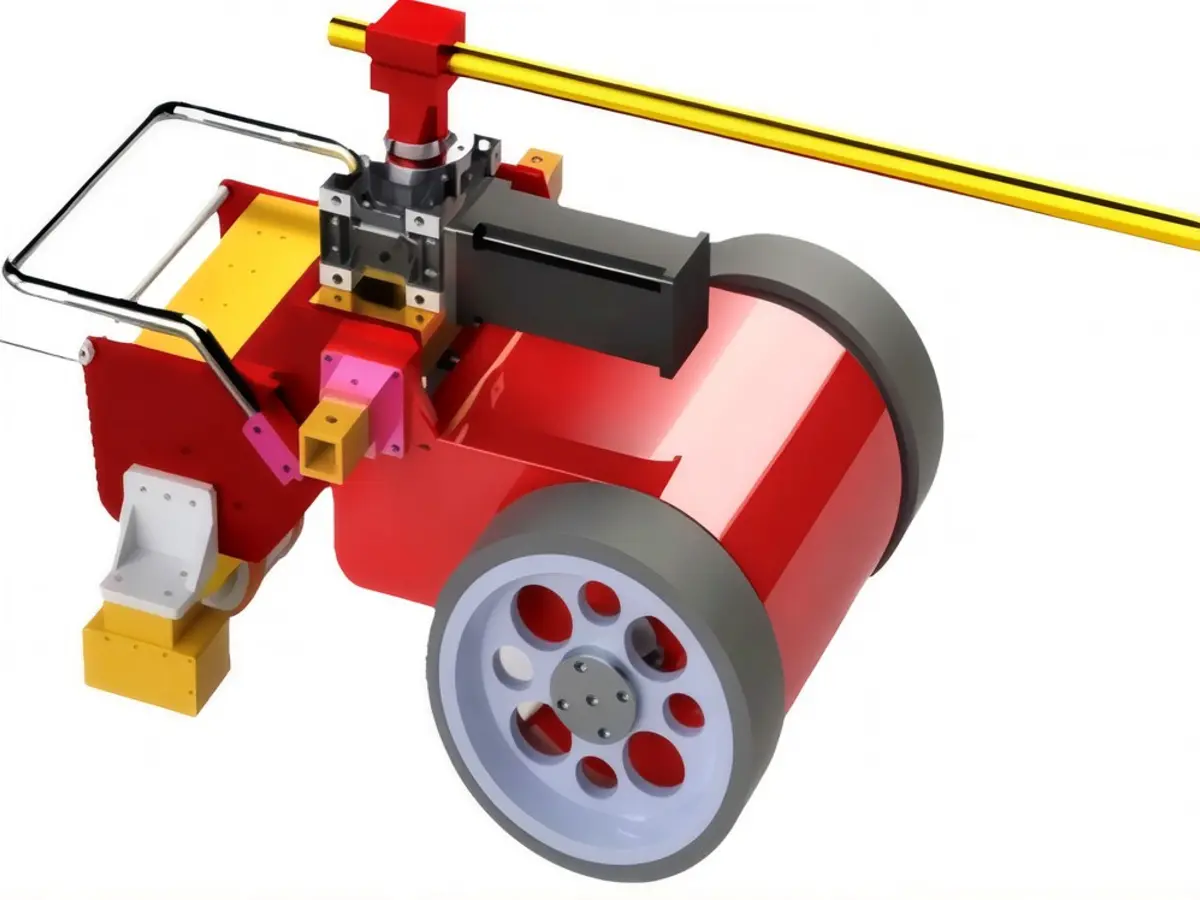
Figure 2. The JT-1 Mini explosion-proof climbing robot — 60 kg, 600 mm manway entry, GB Ex db ib IIB T4 Gb.
References
[1] OSHA — 29 CFR 1910.146, Permit-Required Confined Spaces — https://www.osha.gov/laws-regs/regulations/standardnumber/1910/1910.146
[2] IECEx — International Electrotechnical Commission System for Certification to Standards Relating to Equipment for Use in Explosive Atmospheres — https://www.iecex.com/
[3] European Commission — ATEX equipment directive 2014/34/EU — https://single-market-economy.ec.europa.eu/sectors/mechanical-engineering/atex_en