Associated Gas CHP Economics: 6-18 Month Payback With Jingtao Energy Solutions
Every day, oilfields worldwide flare enough associated gas to generate electricity for 20 million homes. The World Bank estimates the annual value of flared gas exceeds $16 billion. For operators, flaring was once the cheapest option. In 2026, it is becoming the most expensive.
Three regulatory forces are converging: the World Bank’s Zero Routine Flaring by 2030 initiative now covers over 30 governments, carbon pricing mechanisms are expanding from the EU CBAM to national schemes like Nigeria’s $3.50/Mcf flaring penalty (2025), and ESG-focused investors are screening out high-flare operators from project financing.
For oilfield operators in the Middle East, Africa, and Central Asia, the question has shifted from “should we capture associated gas” to “how fast can we deploy a solution that delivers positive cash flow.”
The answer: faster than most operators expect.
Key Takeaways
- $600K/MW installed CAPEX — one-third the cost of conventional gas power ($1.5–2.5M/MW)
- 6–18 month payback — then 20+ years of free power and heat, maintenance at $0.008–0.012/kWh
- 92% flare reduction — Central Asia field data: six 1 MW units, $3.2M annual savings, 11-month payback
- 3 months from order to power — containerized format ships in 8–12 weeks, commissions in 2–4 weeks
What Is Associated Gas CHP — and Why Containerized Matters
Associated petroleum gas varies wildly in composition. High H₂S (up to 5%), low pressure (under 2 bar), and BTU values swinging from 600 to 1,200 make it unsuitable for conventional gas turbines.
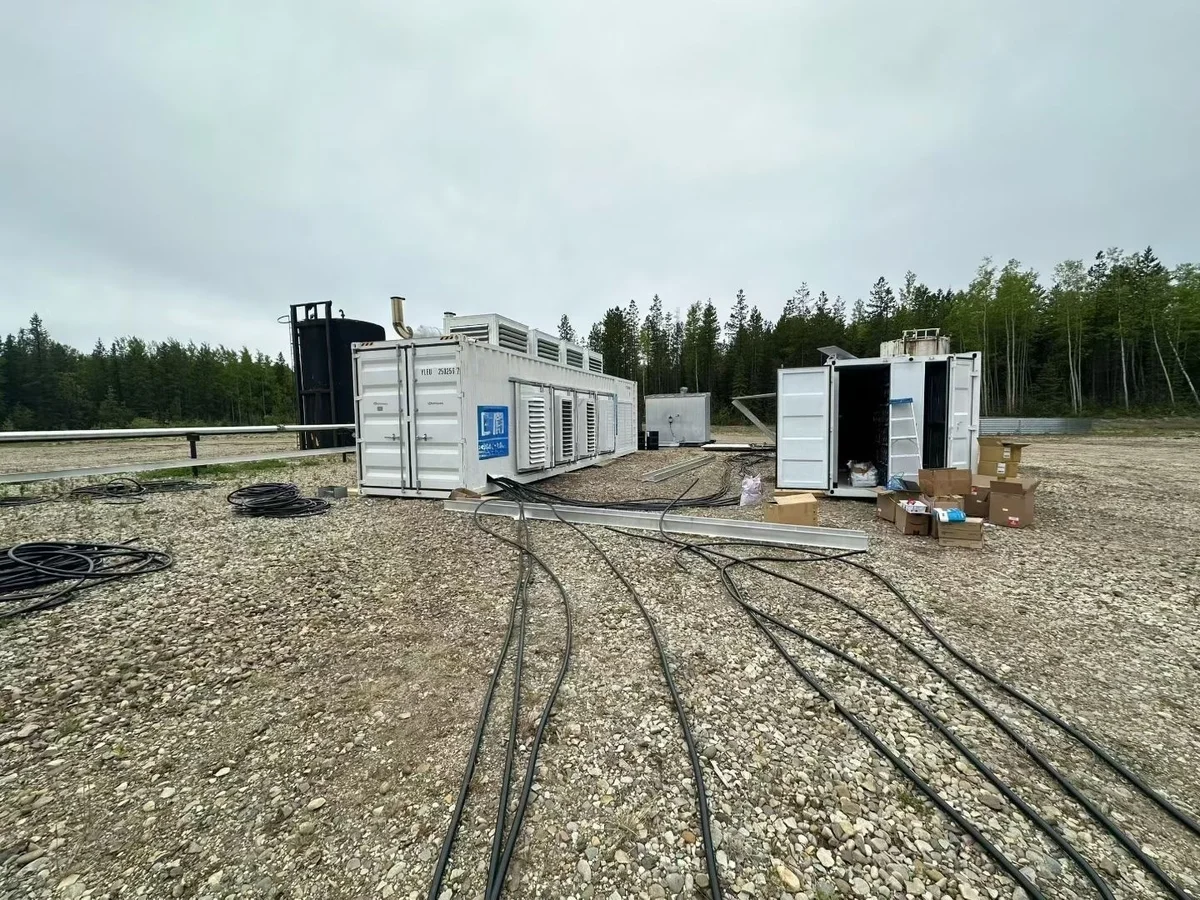
Containerized Combined Heat and Power (CHP) units solve this by integrating gas conditioning, power generation, and heat recovery into a single 40-foot container — explore Jingtao’s containerized gas generator technology. The containerized format eliminates the two largest cost drivers of traditional gas power: engineering design time (12–18 months) and on-site construction (6–12 months). A containerized unit ships in 8–12 weeks and commissions in 2–4 weeks on a prepared concrete pad.
The result: CAPEX of $500,000–$800,000 per MW, compared to $1.5–2.5 million per MW for conventional installation.
1 MW Associated Gas CHP: The Unit Economics
A single 1 MW containerized CHP unit running at 94% availability delivers:
| Output | Annual Figure |
|---|---|
| Electricity | ~8,200 MWh |
| Recoverable heat | ~5,400 MWh thermal |
| Flaring avoided | 150–200 million SCF |
| CO₂-equivalent avoided | ~5,500 tonnes |
At a conservative $0.10/kWh — well below the $0.25–0.40/kWh of diesel generation at remote sites — one MW of CHP produces $820,000 in annual electricity value. Recovered heat displaces additional fuel for heater-treaters and boilers. Combined output exceeds $1 million per year from a single unit.
Payback Analysis: 6 to 18 Months
At $600,000 installed CAPEX for a 1 MW unit generating over $1 million/year in electrical and thermal value, simple payback is 6–8 months at full utilization. Even at a conservative 70% capacity factor, payback stays under 18 months.
After payback, the unit generates free power and heat for the remaining 20+ year service life, less standard engine maintenance of $0.008–0.012/kWh.
Field-Proven: Central Asia Deployment
In one Central Asian oilfield, six 1 MW containerized CHP units were deployed on casinghead gas — 3% H₂S, 800–1,100 BTU — over a six-month period. First full-year results:
- Flare gas utilization: 92% reduction in routine flaring
- Diesel displacement: complete elimination of rental diesel generators for base load
- Heat recovery: crude pre-heating reduced heater-treater fuel by 40%
- Net annual savings: $3.2 million
- Simple payback: 11 months
This deployment reflects the real-world economics operators can expect. Read the full Middle East associated gas power deployment case study →
How Containerized CHP Handles Difficult Gas
The defining challenge of associated gas — and the reason operators have historically flared rather than used it — is gas quality variability. The container integrates gas conditioning upstream of a proven industrial engine platform, with heat recovery capturing exhaust and jacket water heat. See how Jingtao handles high-H₂S and low-pressure gas →
| Gas Challenge | Integrated Solution |
|---|---|
| High H₂S, up to 5% | Onboard amine sweetening skid |
| Low inlet pressure, under 2 bar | Screw compressor with buffer tank |
| Variable BTU, 600–1,200 | Real-time air-fuel ratio control |
| Liquids and condensate carryover | Multi-stage knockout + coalescing filters |
| Remote location, unmanned | 4G/5G SCADA remote start/stop/diagnostics |
Deployment Timeline: Conventional vs Containerized
| Cost Category | Conventional Gas Plant | Containerized CHP |
|---|---|---|
| Engineering & design | 12–18 months, $200K+ | Pre-engineered platform |
| Civil works | Foundation, stack, building | Concrete pad only |
| Construction & installation | 6–12 months on site | 2–4 weeks |
| Gas conditioning | Separate vendor, separate integration | Integrated in container |
| Total installed CAPEX | $1.5M–2.5M per MW | $500K–800K per MW |
| Order to power | 18–30 months | ~3 months |
Is Your Field a Candidate? Three Questions
- Flaring rate — how many MCF/day to the flare?
- Power cost — what’s your all-in cost for electricity (diesel genset rental, fuel logistics, maintenance)?
- Thermal demand — do you heat crude for separation or run heater-treaters?
If flared volume exceeds 300 MCF/day and delivered power cost is above $0.12/kWh, the economics work. For remote fields relying on trucked diesel, the investment case is even stronger. With year-round thermal loads, the CHP advantage compounds — heat recovery offsets fuel that would otherwise be purchased and burned.
The 2026 Regulatory Window
The regulatory trajectory is clear and accelerating. The World Bank’s Zero Routine Flaring by 2030 target is approaching. Nigeria raised its gas flaring penalty from $2.00 to $3.50 per Mcf in 2025. The EU Carbon Border Adjustment Mechanism (CBAM) is operational and expanding. The IFC and multilateral development banks now require flare reduction commitments as a condition of oil and gas project financing.
For operators still evaluating options, 2026 represents a window to deploy proven, payback-positive associated gas CHP before compliance costs escalate. Equipment is available. Economics are established. Deployment timeline — approximately three months from order to power generation — is shorter than most operators assume.
Turn Flared Gas Into Operating Profit
Jingtao Energy’s containerized associated gas CHP units deliver payback in under 18 months — then generate free power and heat for 20+ years. Technology is field-proven. Economics are clear. The regulatory clock is ticking.
Contact our engineering team → for a site-specific economic assessment of your flared gas stream.
📢 This article was also shared on LinkedIn — join the conversation.
Related Resources
- The Technology Behind Associated Gas: Taming High H₂S and Low Pressure
- The Flaring Dilemma in the Middle East & Africa
- Decoding the Lights-Out Factory: Power Catwalk and Robotic Arms
Frequently Asked Questions
What gas quality range can these CHP units accept?
The system handles associated gas from 400 to 1,500 BTU, with H₂S concentrations up to 5% using integrated sweetening. Real-time air-fuel ratio control compensates for BTU swings common in casinghead and separator-off gas.
How long from contract signing to electricity generation?
Standard containerized CHP units ship in 8–12 weeks. Site preparation requires a concrete pad, gas line connection, and power bus tie-in. Installation and commissioning is 2–4 weeks. Total: approximately 3 months.
What happens when gas composition changes over the field’s life?
The SCADA system continuously monitors gas quality and adjusts engine operating parameters. As long as the gas remains within the unit’s design envelope — which covers the vast majority of associated gas profiles from primary production through waterflood — no hardware modifications are needed.
Can containerized CHP replace grid power?
The primary use case is remote oilfields where grid power is unavailable or unreliable. The CHP unit serves as base load, with existing diesel generators retained for backup and peak shaving only.
What does 20-year maintenance look like?
Standard engine service intervals: oil change at 500 hours, major service at 2,000 hours. Remote condition monitoring enables predictive maintenance. Typical annual maintenance cost is $0.008–0.012/kWh — significantly lower than the all-in cost of diesel generation, which includes fuel delivery logistics.
Technical Data Sheet
| Parameter | Specification |
|---|---|
| Investment Payback | 6–18 months |
| Annual Generation | ~8,200 MWh (single unit) |
| CHP System Efficiency | ~85% (combined heat and power) |
| Fuel Type | Raw associated gas, no pre-treatment required |
| H₂S Tolerance | Proven at 2,000 ppm (Xinjiang, 5 years) |
| Temperature Range | −30°C to +50°C |
| Delivery Lead Time | 8–12 weeks (containerized skid) |
| Commissioning | 2–4 weeks on prepared concrete pad |
| Maintenance Cost | $0.008–0.012/kWh (predictive maintenance enabled) |
Data sourced from field operating records (Xinjiang & Qinghai oilfields) and manufacturer specifications. Individual project economics depend on gas composition and local energy prices.
Need help choosing the right equipment?
Our engineers review your application and recommend the best fit — no obligation.